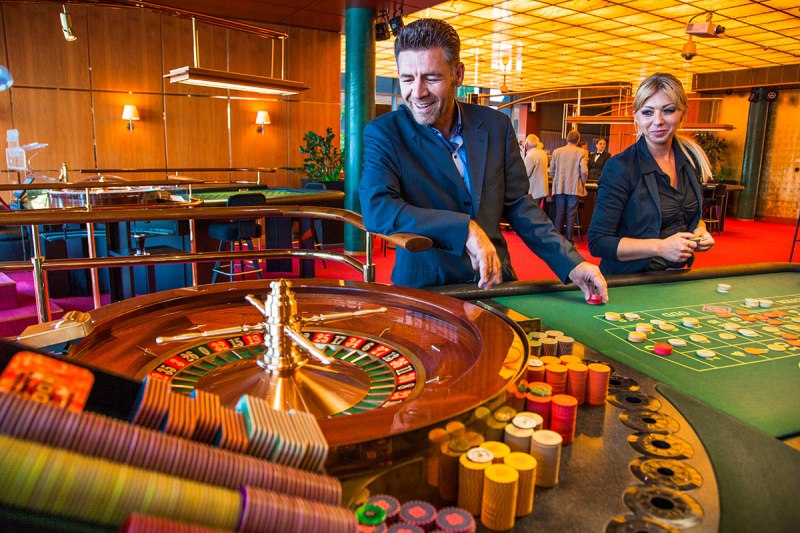
According to Morgan Stanley Asia Ltd analysts, Cambodia has now become an enticing destination for Macanese junket casino operators to set up a store, as the demand is rising increasingly when the junket industry in Macau is dwindling.
Casinos have increased significantly in Cambodia over the past year with a 53% increase in licensing issued in 2018. What’s influencing this surge?
Brief Background
CAMBODIA is a nation that provides tourists, adventure-seekers, and history enthusiasts’ unforgettable experiences — from Angkor Wat to the Khmer Rouge killing fields. Today, it also caters to gamblers.
Located near booming economies such as Vietnam and Thailand, with Japan, South Korea, Australia, and economic powerhouses such as China and India just a few miles away, Cambodia seems to be on the rise as an entertainment hub for the nation’s gamblers, and high roller too.
Cambodia’s gaming industry is highly diverse, spanning from the world-class modern resort of Nagaworld in Phnom Penh and the vast beachside gaming city of Sihanoukville to the numerous casinos bordering Thailand and Vietnam.
Presently, about 105 casino licenses have been authorized and there are 48 operating casinos, primarily clustered in Sihanoukville, where casino development is expanding rapidly. Also, there are casinos in Poipet and Pailin on the border with Thailand, and in Kampot and Bavet, bordering Vietnam.
Cambodia does have a long history of gaming — from card rooms to lotteries and sportsbooks, like boxing games — that also implies that the industry is now established, catering for both foreigners and locals alike. Nevertheless, the promotion of gaming competitions and gaming practices is also explicitly prohibited from Cambodia.
That’s because Cambodians are forbidden from gambling. As casinos in Cambodia are exclusively for foreign players only, others say the intention is to loot the wealthy and send to the poor. Cambodia is presently experiencing a boom in tourism, with international arrivals climbing by 12 percent to 5.6 million tourists in 2019 and arrivals at Phnom Penh International Airport expanding by 21 percent during the same time.
Visitors from China climbed by 46 percent to 1.2 million during the time, making the Republic the leading tourist source (22 percent), led by Vietnam (15 percent) and Laos (9 percent). The tourism industry of Cambodia is seeking to attract seven million visitors by 2020, from which two million are due to arrive from China.
Spurred by Cambodia’s fast-growing tourism sector, gaming has developed steadily in recent years. However this accelerated growth often needs stricter regulatory measures, and that’s why the government has introduced a revised gaming regulation that would include consistent and precise legal guidelines for the local gaming industry.
Cambodia as a Gambling Junket Hub
Cambodia’s gaming industry is constantly seeking to entice gamblers in China through junket service organized in partnership with local casinos in Cambodia and foreign travel agencies.
Amid concerns about how often players are beneficial to the tourism sector, casinos, and junket companies have maintained that their activities draw a significant number of foreign tourists.
However, according to Lorien Pilling, Director of Global Betting and Gaming Consultants in the United Kingdom, China imposes limits on gambling and explicitly forbids its residents from taking massive sums of money overseas.
The junket service then needs to settle with the gambler on his return to China.
Lorien Pilling said in a statement that “It’s all about realizing the amount of money these individuals are going to put behind at the casino; moreover, it’s a labor-intensive process to see which folks you want to be included to the group.”
Progressively, Cambodia has become a more attractive hub for Chinese gamblers due to the Chinese crackdown in traditional gaming hubs like Macau.
Wolfgang Georg Arlt, general manager of the China Outbound Tourism Research Institute, had this to say “Cambodia is just a stone – throw from China but also less strictly monitored than Macau,”.
At NagaWorld, this is the biggest casino in Cambodia. The VIP revenue climbed by 25 percent to $108 million during the first – half of the year, much of which is attributed by the casino to gamblers who came in through junket service.
Nagaworld’s six-month interim results read that “The sustained decline in Macau gaming introduces chances for the Group to even further permeate the provincial and Chinese gaming markets, as junkets strive to broaden their activities to many other Asian countries”.
However according to their half-year reports, Nagaworld is planning to work with Chinese outbound travel agents, and flights from Changsha, China, to Phnom Penh began in July.
The importance of casino junkets towards Cambodia financial
Cambodia is on the verge of announcing further gaming laws later in the year to improve its growing gambling industry. This is done to encourage international investors. The proposed regulations, which government agencies have been working on for the past 3 years, actively sought, among other things, to streamline the sector by enforcing a 4 to 5 percent tax on casino revenue.
As predicted, the envisaged tax rates did not fall well with the casinos in Cambodia, who together remit a staggering sum of US$ 50 million of their US$ 4 billion in tax revenue yearly.
Cambodian authorities, nevertheless, has defended this initiative, referencing comparable rates in neighboring countries like Singapore, adding that the new legislation would be vital in positioning Cambodia as the ‘go-to gambling and casino hub’.
Casino Operators, identified as VIP junket operators, are essentially the key motivating force behind the development of the casino sector.
The task of these operators is to serve as facilitators, guaranteeing an agreed sum of money, providing free lodging, transportation, and other benefits to recruited gamblers. The influence of these VIP junket operators is huge.
According to Naga Corp’s Hong Kong Stock Exchange on the 28th of February reported that Cambodia’s biggest casino, Nagaworld. This is an impressive 140 percent rise in VIP rolling sales to $21.1 billion in 2017, rising from $8.71 billion the year before.
Moreover, in 2017, Nagaworld’s sales were up to $625.33 million, up from $225.66 million recorded in the prior year. Its net income grew by 39% to $255.2 million.